Tube Jumpers
Games You May Like
Tube Jumpers Is Simple Input, High Chaos, Real Timing Skill
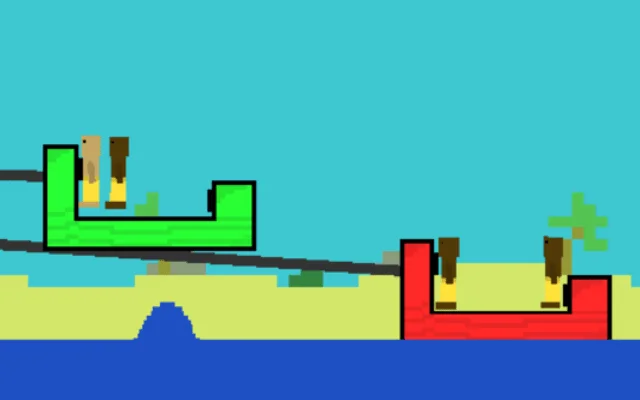
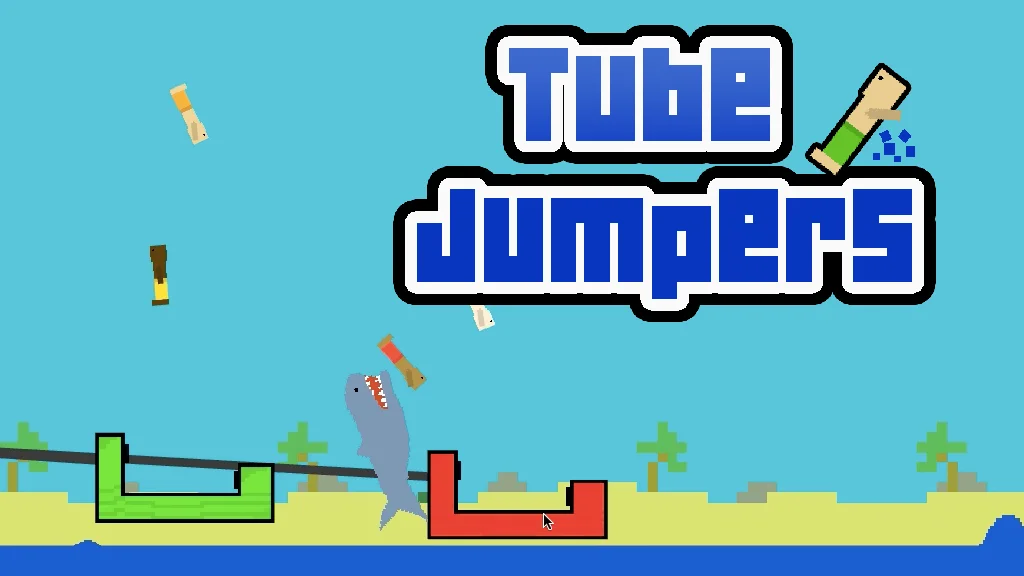
Tube Jumpers is a two-player physics duel where both fighters balance on inflatable tubes while waves, sea creatures, and random hazards disrupt movement. You usually have minimal controls, so timing and spacing are everything.
Because the platform is unstable, every jump changes momentum for both players. Winning is less about attacking nonstop and more about forcing your opponent into awkward landings.
Key Winning Concepts
- 🎯 Balance control: stay centered unless you are setting a push angle.
- Jump timing: late jumps often punish over-aggressive opponents.
- Hazard awareness: incoming waves can reverse momentum instantly.
- 🚀 Positional pressure: cornering rival near tube edge creates free wins.
Practical Match Tactics
- 🔥 Open calmly to read hazard rhythm before committing.
- Bait opponent jumps, then counter with delayed movement.
- Preserve center control after every exchange.
- 💡 In close games, prioritize survival over risky knockout attempts.
Frequent Loss Patterns
- ✅ Spamming jumps and losing balance control.
- Ignoring hazard timing while chasing a push.
- Controlled patience creates more consistent wins.
Advanced Strategy Layers
When basics feel stable in Tube Jumpers, improvement comes more from decision quality than raw speed. Instead of trying to force perfect runs, focus on reading repeated situations better each attempt and making one cleaner choice at a time.
A practical way to level up is to review the moment just before each mistake, identify what signal you missed, and apply a small correction in the next run. This keeps progress steady and makes your playstyle look more controlled over long sessions.
Progression Checklist
- 🎮 Define a repeatable baseline route or approach.
- Improve execution consistency before pushing risky optimization.
- Track conversion rate in high-pressure moments.
- ✅ Refine one mechanic at a time until it is automatic.
- Return to advanced routes only after baseline stability is strong.
Common Mistakes and Quick Fixes
Most failed attempts come from over-committing after a good moment, rushing transitions, or trying to recover too aggressively. A quick fix is to reset your pace for a few seconds, re-establish clean positioning, and only take higher-risk plays when the setup is clearly in your favor.
Hot Games

New Games

