Geometry Dash
Games You May Like
Jump to the Beat and Never Stop in Geometry Dash
Geometry Dash is a rhythm-based platformer built on one core principle: the music is not background accompaniment — it is the game itself. Every jump, every obstacle, every environmental shift is choreographed precisely to the beat of the electronic track playing beneath each level. When you are playing well, the jumps feel inevitable, musical, and effortless. When you die at 94% because you forgot a single spike pattern, the music cuts out and you restart from a place of very specific, very personal defeat.
Created by Swedish developer Robert Topala (RobTop), the game launched in 2013 and built one of gaming's most dedicated communities. The base game offered a set of official levels with escalating difficulty, but the level editor and Steam Workshop integration eventually opened up an ocean of player-made content — including what players call "Extreme Demons," levels so precisely demanding that completing them can take thousands of attempts spanning months of practice.
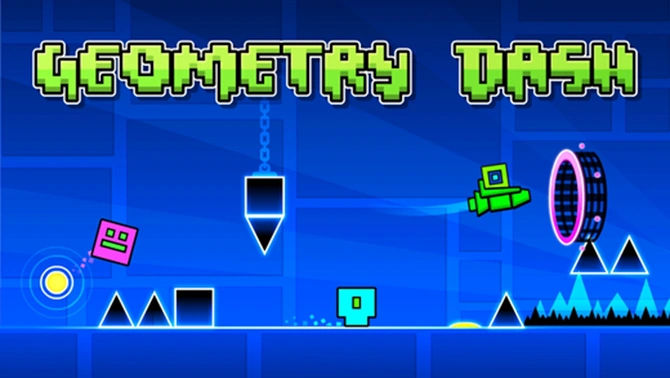
Game Modes and How They Change Your Movement
Geometry Dash is not just one movement style. As you progress through levels, portals transform your icon into different forms, each with different physics and control behavior:
- 🟦 Cube: The default mode. Tap to jump; tap while airborne for a small double-jump adjustment. Most levels begin here and return to it frequently.
- 🚀 Ship: Hold to fly upward, release to descend. The ship moves fast and requires sustained fine control. Ceiling/floor death zones make this mode intensely demanding.
- 🔵 Ball: Tap to invert gravity. The ball rolls and alternates between floor and ceiling based on your taps. Rhythm becomes critical as each tap flips the ball's orientation.
- 👾 UFO: Tap for a burst of upward force. Releases fall naturally. Requires burst-control to thread moving obstacles without overshooting.
- 🌊 Wave: Hold to go diagonally up-right; release to go diagonally down-right. The wave mode is considered one of the hardest due to its constant directional sensitivity.
- 🤖 Robot & Spider: Later additions with modified jump arcs and gravity-flip mechanics that appear in mid-to-late game levels.
How to Actually Get Good at Geometry Dash
Beyond raw reflexes, Geometry Dash rewards a specific learning methodology that separates casual players from those who complete difficult levels:
- 🎵 Learn the song first: Before you can master a level, internalize its audio track. Listen to the music outside the game. Know where the drops hit, where the tempo changes, where the big beats land. The level is built around those moments.
- 📍 Use Practice Mode extensively: Practice Mode drops checkpoints every time you die. Use it to map out the exact death points in a level before attempting full runs. Once you know every obstacle, normal mode becomes about execution rather than discovery.
- 📐 Segment the level: Divide the level into thirds or quarters. Achieve clean runs through segment one before worrying about two. Build forward section by section rather than grinding from the beginning each time.
- 🎯 Memorize, do not react: At higher speeds, reacting to obstacles is too slow. The game must be memorized. Every jump, every hold, every tap must become muscle memory tied to an audio cue — not visual emergency response.
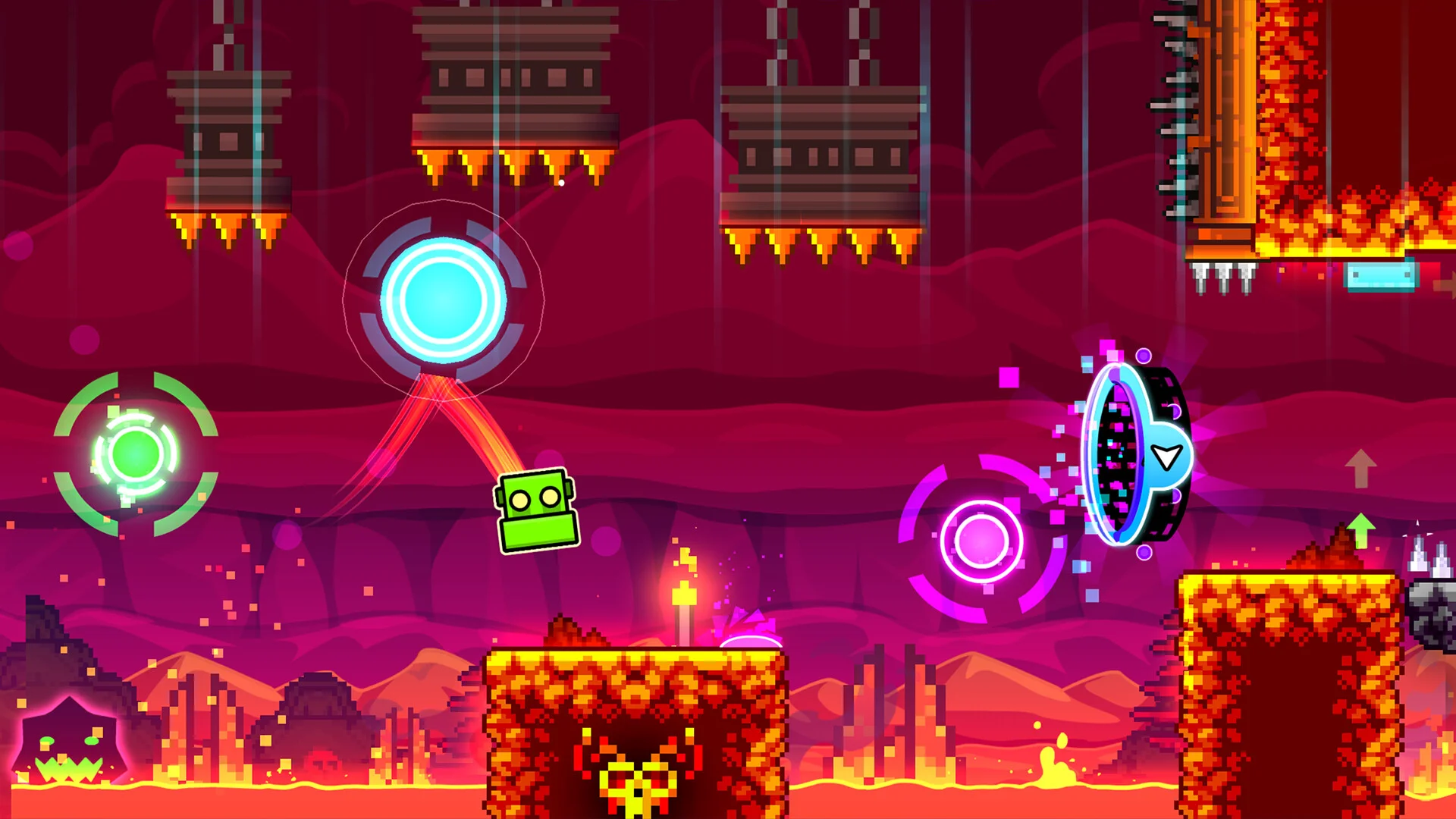
Official Levels — A Carefully Graded Difficulty Path
The official level set in Geometry Dash provides a curated difficulty path from Easy through Normal, Hard, Harder, Insane, and finally Demon — with Demon itself subdivided into Easy, Medium, Hard, Insane, and Extreme Demon ratings. The official starting levels like Stereo Madness and Back On Track introduce cube mode fundamentals gently. By the time players reach Clubstep or Theory of Everything 2, they are navigating multi-mode gauntlets that demand genuine mastery of all movement forms. Completing the official Demon levels is considered a significant achievement; completing Extreme Demons (mostly community-created) borders on elite competitive gaming.
Tips to Clear Your First Levels and Build Skills
- 🎧 Always play with headphones or good speakers — the audio cues are not optional information, they are the game.
- 📌 In Practice Mode, place checkpoints at every obstacle cluster you die to repeatedly, not just at the hardest single spike.
- 🔁 Restart from zero after consistent practice section clears — the brain builds full-level muscle memory differently from segmented practice, and you need both.
- 🧘 Expect to die multiple times in the final 10% of levels to pressure and adrenaline. This is universal. The solution is more full-run attempts to desensitize the anxiety response.
- ⚡ When you feel "in the zone," do not overthink it — keep playing and trust the muscle memory your practice has built.
Hot Games

New Games

