Flappy Bird
Games You May Like
The Game That Stopped the Internet — and Never Got Easier
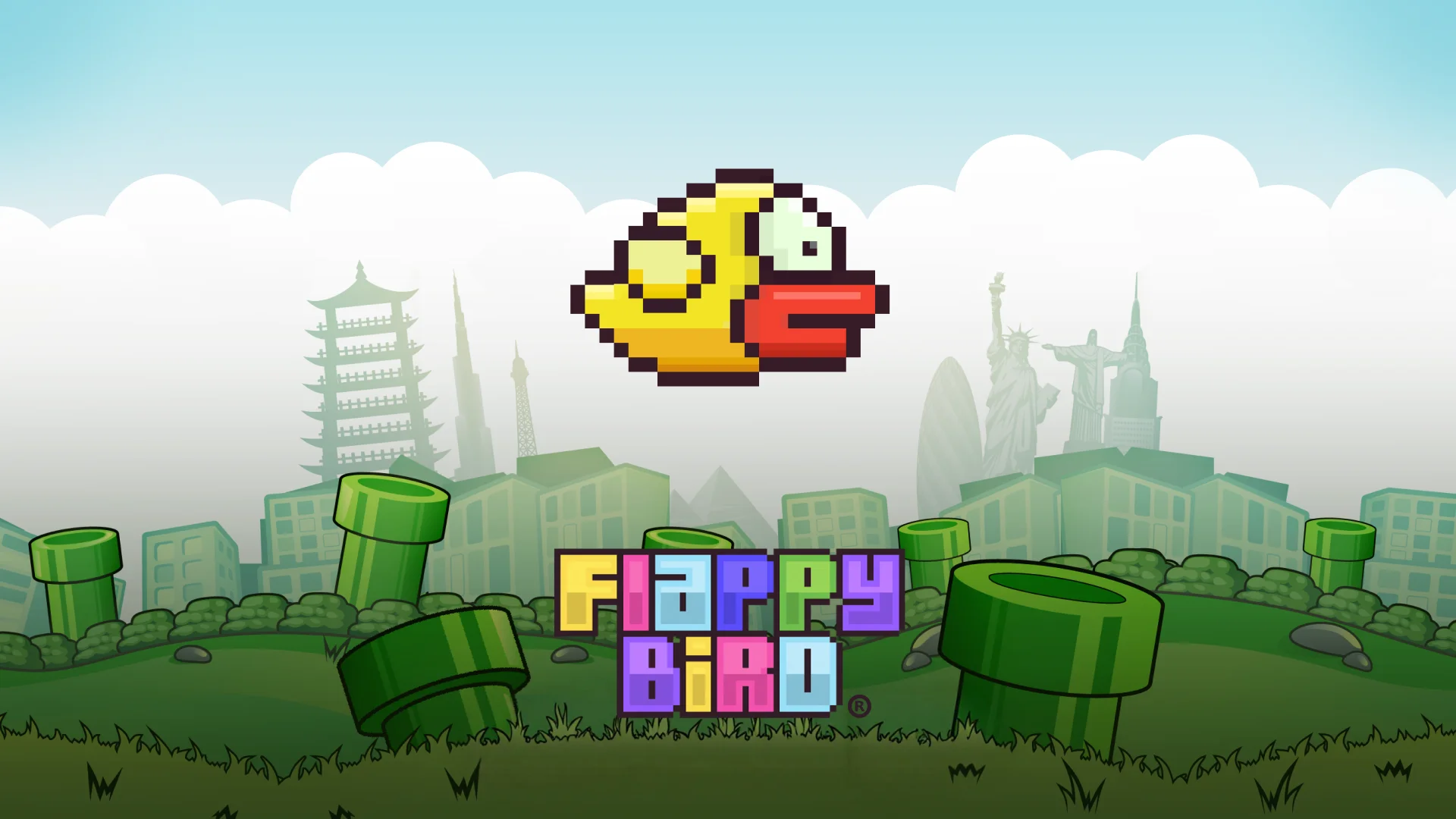
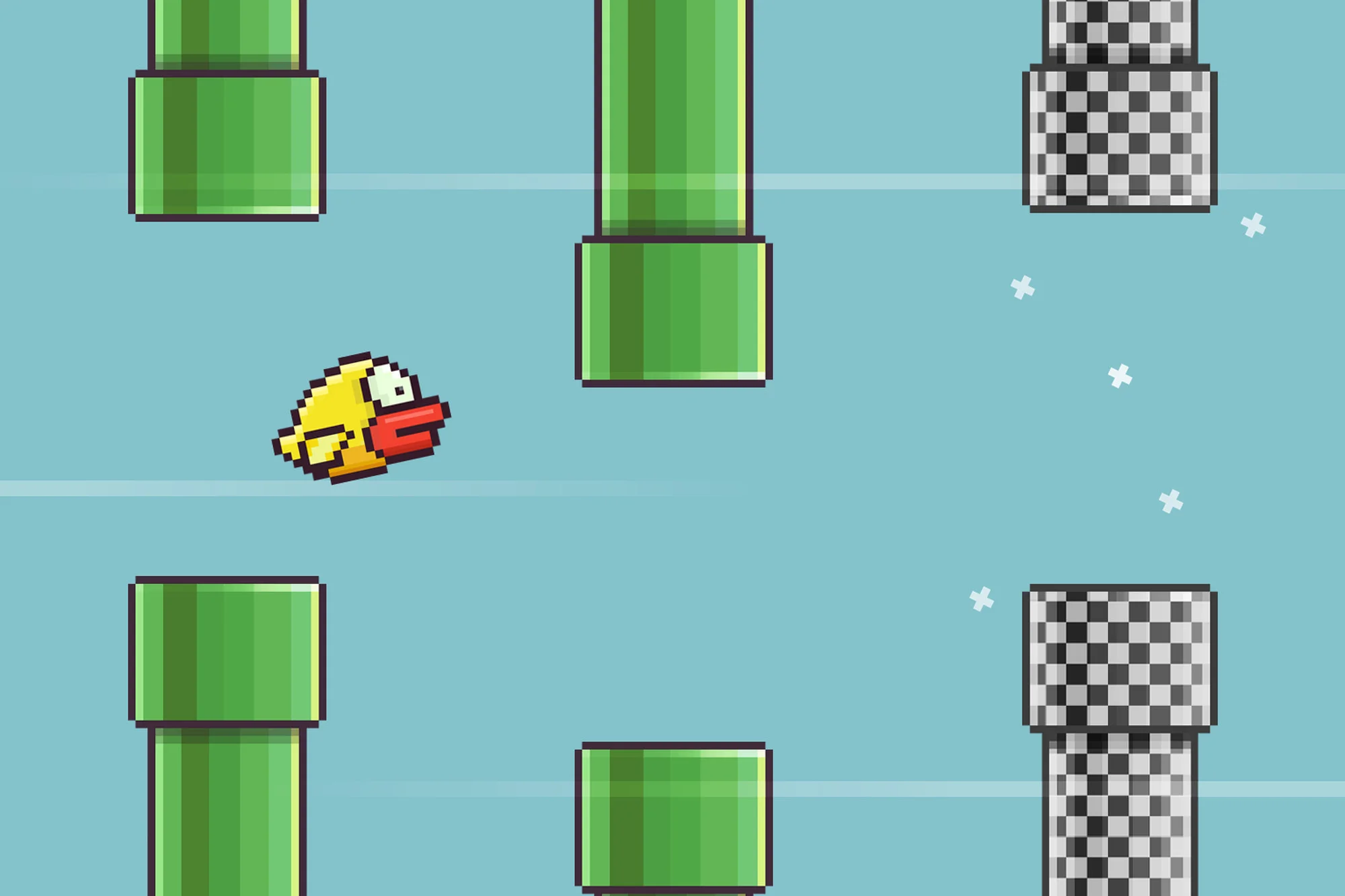
Flappy Bird is one of the most notorious games in the entire history of mobile and browser gaming. Created by Vietnamese developer Dong Nguyen and released in 2013, it became a global obsession in early 2014, reaching 50 million downloads before being voluntarily removed from app stores by its creator — who described the attention it generated as overwhelming. The game's concept is as simple as game design gets: tap to make the bird flap upward, stop tapping and gravity pulls it down. Navigate through the gaps between pairs of green pipes without touching anything. Score one point for each gap cleared.
What made Flappy Bird culturally explosive was not its mechanics but its difficulty curve — which is essentially a vertical wall. The bird falls fast. The gaps are narrow. The pipes come continuously. Most first-time players score zero. Scores in the teens feel like genuine achievements. Scores above 40 put you in rare company. This brutal simplicity created an almost viral loop of frustration and the desperate need for "just one more try."
Why Flappy Bird Is Harder Than It Looks
The physics of Flappy Bird are deceptively punishing. Each tap gives the bird a fixed upward velocity boost, and gravity pulls it down at a constant acceleration. This creates an arc that players must learn to read and control precisely:
- 🐦 The bird drops faster than expected: First-time players consistently tap too infrequently because the fall speed catches them off guard. You need to tap more often than feels natural.
- 📏 The gap is narrow compared to the bird's height: At first the gap looks generous. In practice, every tap arc must bring you through the exact center zone — hit the top pipe or bottom pipe and it is over instantly.
- 🌊 Pipes vary in height: Each pipe pair appears at a random height position. The gap you thread on one pipe may be near the top of the screen; the next might be near the bottom. This requires constant vertical repositioning, not just steady flight.
- ⚡ The speed does not change — but your focus breaks down: A long run creates pressure. At pipe 10 or 15, you are aware of how far you have come, and that awareness causes micro-hesitations that cost runs.
The Science of Getting Better — Tap Rhythm and Visual Focus
Players who achieve high scores in Flappy Bird almost universally describe the same shift in their approach: they stop reacting to the pipe gaps directly and start maintaining a rhythm of small, consistent taps that keep the bird at a manageable vertical oscillation throughout each run.
Rather than big taps to climb and then coasting to fall, the high-score approach uses a steady tap cadence — roughly two to three taps per second depending on where in the screen you want to maintain altitude. This creates a predictable wave motion for the bird that you can then adjust slightly to thread each gap, rather than making dramatic altitude changes for every pipe.
The Mental Game — Dealing With Pressure Runs
Once you can consistently reach scores in the 5–10 range, the next barrier is psychologically manufactured. When a run hits double digits, players become aware of the score and start thinking about landing rather than threading. The muscle memory and tap rhythm that got them to pipe 12 gets disrupted by conscious deliberate thinking. Experienced Flappy Bird players learn to suppress the score awareness entirely during runs — treating pipe 18 with exactly the same neutral attention they gave to pipe 2. The game rewards emotional neutrality above all else.
Core Tips for Raising Your Score
- 🎯 Aim to keep the bird in the vertical middle third of the screen as much as possible — this gives you the most flexibility to adjust for high or low pipe gaps.
- 🎵 Develop a tap rhythm before the first pipe appears. Use the brief flying period before pipe one to establish your cadence and stick to it.
- 👁️ Focus on the gap opening of the next pipe, not your bird. Your peripheral vision will track the bird; let it. Direct your focal attention forward to where you need to go.
- 🧘 When a run reaches a new personal best pipe count, take a breath and actively suppress the excitement. Emotional spikes disrupt rhythm more than any difficult pipe pair will.
- 🔁 Keep restart intervals short. Research on skill games shows that rapid restart cycles build habit loops faster than long gaps between attempts. One more try — immediately.
Hot Games

New Games

