Die in the Dungeon
Games You May Like
A Roguelike Built Entirely Around Dice
Die in the Dungeon replaces the usual action-RPG toolkit with something more tactile and unpredictable: a hand of dice, each with its own passive abilities and face values. Every encounter is a puzzle you solve with the dice you currently carry, and the decisions you make between fights determine what kind of hand you'll be managing deeper in.
What a Turn Actually Looks Like
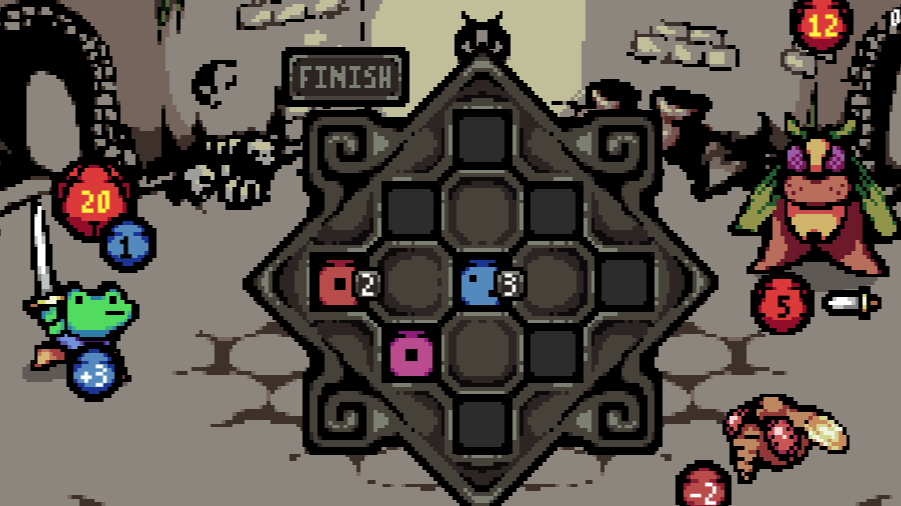
At the start of each combat turn you draw a number of dice from your bag. You then choose which dice to place in the available slots — attack, block, mana, and special — before confirming your action. Dice faces show values like shield points, sword strikes, or spell charges, and some dice have synergy traits that activate when placed adjacent to a compatible die. Learning what fires what transforms the system from random into remarkably strategic.
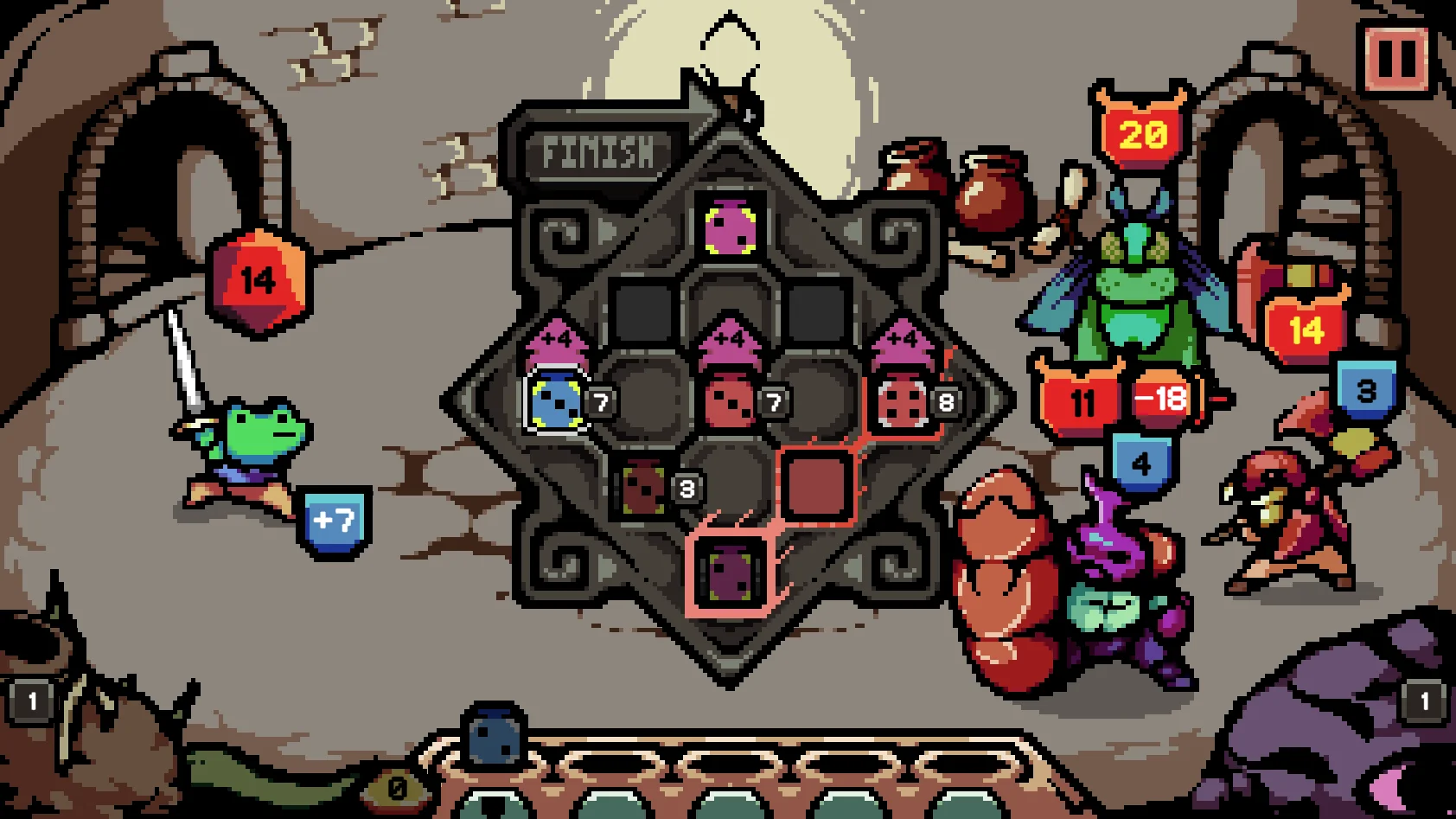
Building Your Dice Hand Between Floors
After each cleared floor you choose from a selection of new dice to add to your bag. This is where the game's deckbuilder DNA really shows — each pick either reinforces a strategy you're building toward or opens a new angle entirely. Dedicated offensive dice hands tend to hit hard early but struggle when enemies enrage. Mixed hands with high shield dice scale better into boss encounters.
Floor Escalation and Enemy Variety
Enemies aren't just stat sponges — they carry their own dice-based attack patterns displayed as telegraphed intentions. Some enemies stack armor aggressively and need multiple offensive slots to crack. Others apply debuffs that reduce the maximum face values of your dice until cleared. The further down you descend, the more these mechanics layer together into genuinely threatening combinations.
Synergy Principles that Win Runs
- 🎲 Prioritize dice that generate mana — it unlocks passive abilities that can completely flip fight outcomes.
- 🎲 Avoid mixing too many die types; focused hands with 3–4 die archetypes outperform random collections.
- 🎲 Read enemy intent before placing dice — over-investing in attack while ignoring a heavy incoming strike is the most common way to lose.
- 🎲 Shield dice with high roll variance are more valuable than consistent low shields on boss floors.
- 🎲 Relic items that boost a specific die face are strongest when you've already committed to that die type.
Hot Games

New Games

