Dead Plate
Games You May Like
🍽️ About Dead Plate
Dead Plate is a short narrative horror game wrapped in the elegant surface of fine dining. You play as Rody, a young man who takes a night job at a fancy restaurant to make ends meet. The place looks polished, the menu is expensive, and the owner appears charismatic. But as your shift continues, small moments start to feel wrong: the way your boss watches you, strange sounds from back rooms, missing details in stories people tell, and a tension that rises with every task you complete. Dead Plate turns ordinary service work into psychological dread, then pushes it into full survival horror.
🎭 Setting and Tone
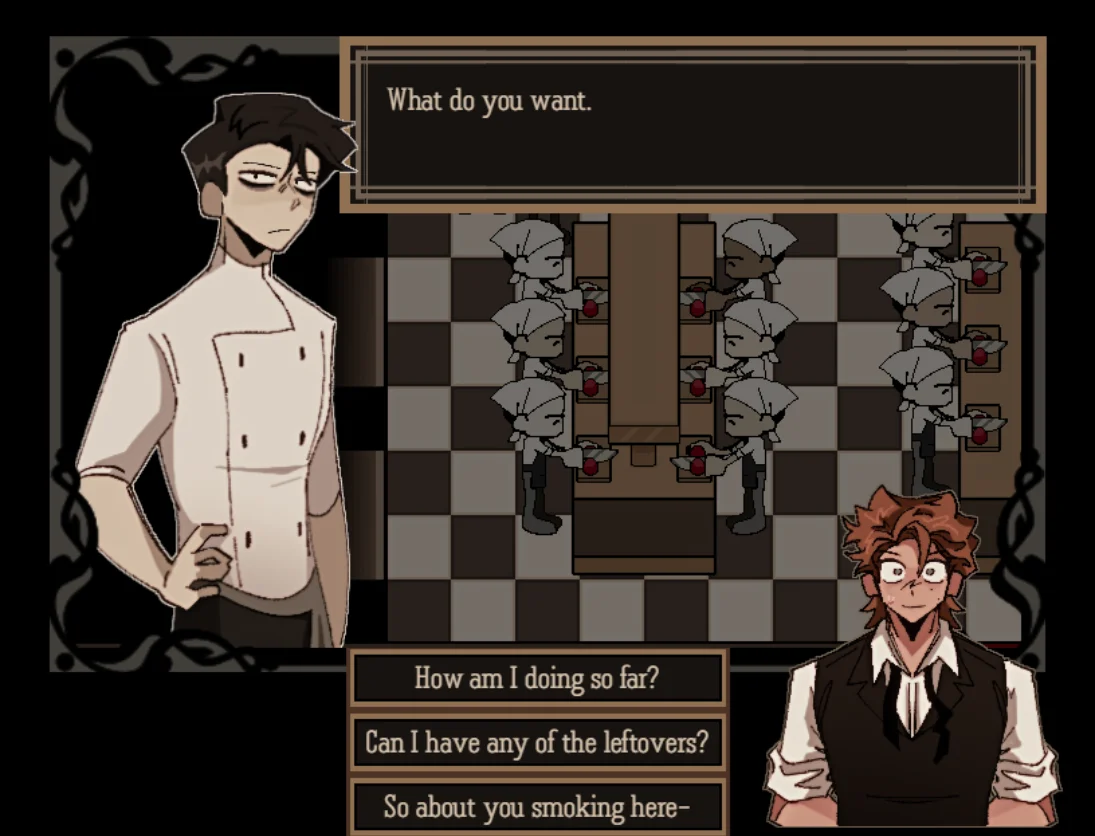
What makes Dead Plate stand out is contrast. Most of the game happens in a beautiful, controlled restaurant space with soft lighting, expensive decor, and polite conversation. Instead of using constant jump scares, the game builds fear through atmosphere, pacing, and social pressure. You are expected to smile, serve, and obey while your instincts are telling you something is deeply off. That conflict between public calm and private fear carries the whole experience.
- Surface: luxury dining room, warm lights, elegant service.
- Reality: manipulation, obsession, and hidden violence.
- Effect: tension rises from social discomfort before pure horror hits.
🕹️ Gameplay Structure
Dead Plate combines light task management, exploration, dialogue, and branching choices. You move through restaurant duties such as taking orders, serving guests, and handling requests from your boss, but each routine action can reveal clues about the truth behind the restaurant. Conversations matter, timing matters, and curiosity can be dangerous. Depending on what you do and how you respond, scenes can unfold differently and lead to different outcomes. This gives the game replay value despite its compact length.
Core Loop
- Complete shift tasks and keep customers satisfied.
- Observe suspicious behavior and collect contextual clues.
- Make dialogue choices that shape trust, risk, and outcomes.
- React fast when the atmosphere collapses into survival mode.
⭐ Why Players Love It
Dead Plate has become popular because it delivers a complete horror story without wasting your time. The writing feels personal, the characters are memorable, and the threat feels intimate rather than abstract. It is not about fighting monsters with weapons. It is about reading people, noticing warning signs, and deciding when to comply and when to run. Fans of indie narrative horror appreciate how much emotion and tension the game creates in such a focused format.
Highlights: narrative focus, strong character dynamics, replayable routes, and a memorable final escalation.
🧠 Tips for First Playthrough
Pay close attention to dialogue and room details, because Dead Plate often foreshadows danger through subtle cues. Explore when you can, but do not treat every area as safe. If a character's behavior changes, take it seriously. On replay, try different conversation choices and pacing to see alternate scenes and endings. Headphones are recommended, since sound design carries a lot of the tension and helps signal when a scene is turning.
- ✅ Read every line of dialogue carefully, not just objective text.
- ✅ Track tone shifts in conversations, they usually predict danger.
- ✅ Replay with different choices to unlock alternate outcomes.
- ✅ Use headphones for better timing and tension cues.
🔚 Final Thoughts
Dead Plate is a great choice if you want story-first horror with strong atmosphere, sharp character work, and meaningful tension in every interaction. It is short, stylish, and unsettling in all the right ways. If you enjoy games where danger hides behind a normal social setting, this one is absolutely worth your time.
Hot Games

New Games

