Amanda the Adventurer
Games You May Like
The Children's Show That Should Never Have Existed
Amanda the Adventurer is an analog horror puzzle game developed by MANGLEDmaw Games and published by DreadXP. Released in full on April 25, 2023, it began as an entry in the DreadXP Found Footage Game Jam in 2022 before exploding into a cultural phenomenon — eventually accumulating over 1.5 billion YouTube views from streamers and horror content creators worldwide.
You play as Riley Park, who inherits the home of their recently deceased Aunt Kate in Kensdale, Ohio. Inside Kate's attic, Riley discovers a collection of VHS tapes from a forgotten children's cartoon called Amanda the Adventurer — a show that started innocuously as a public-access program, was acquired by a shadowy corporation called Hameln Entertainment, and quietly became the fixation of a woman investigating why children were disappearing after watching it. The more tapes you find and watch, the clearer it becomes: Amanda is not just a cartoon character.
Why the Horror Works So Effectively
What separates Amanda the Adventurer from standard horror games is its inversion of trust. The game begins with a warm, colorful, friendly-looking cartoon. Amanda and her shy sheep companion Wooly wave at you. They ask simple questions. The production design mimics 1990s edutainment television — the kind of show you grew up thinking was harmless. That familiarity is precisely what the game weaponizes. By the time the cartoon's tone shifts and Amanda stops being friendly, players are already emotionally invested in a way that cold-open horror can never achieve.
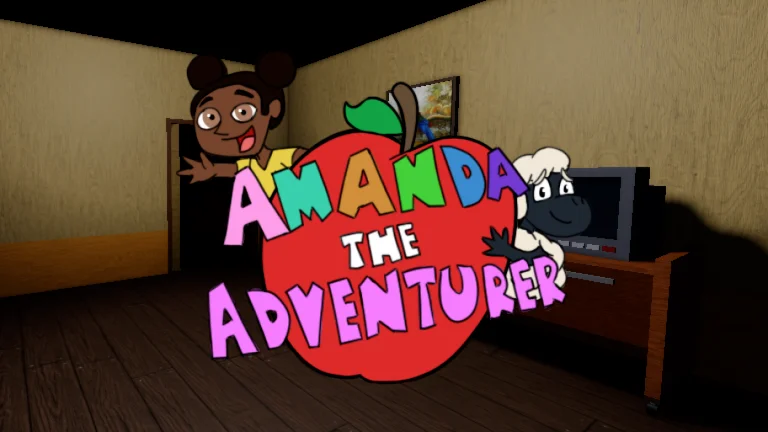
How the VHS Mechanic Works — You're Part of the Show
Most horror games separate the player from the horror through glass — you watch monsters, you run from them, but there's a clear boundary. Amanda the Adventurer dissolves that wall. When you play a VHS tape, the TV becomes interactive. Amanda turns to the camera and asks you questions. You answer by typing or selecting responses, and those answers directly affect what happens next — both inside the tape and in the physical attic around you.
The core gameplay loop flows through five mechanic pillars:
- 📼 VHS Tape Discovery — Search the attic to find and unlock new tapes, each revealing additional fragments of the show's history and Hameln's dark corporate agenda.
- 💬 Interactive Dialogue — Type responses to Amanda's on-screen questions. Wrong or evasive answers change Amanda's behavior, destabilize the tape's atmosphere, and push the game toward darker endings.
- 🔍 Environmental Puzzle Solving — Codes, hidden objects, and puzzle items in the real attic environment connect directly to clues found inside the tapes themselves.
- 📁 Secret Tape Hunting — Several tapes remain hidden and require specific actions across multiple episodes to unlock, each containing disturbing behind-the-scenes footage and corporate documents.
- 🔀 Multiple Branching Endings — Your aggregate choices across all tape viewings determine which of several endings Riley reaches — some deadly, some ambiguous, and one that can only be reached by finding everything.
The Lore Behind Hameln Entertainment
The fictional corporation Hameln Entertainment is the game's antagonist force — not a monster, but an institution. Through secret tapes, you gradually uncover what the company was actually doing: using a young girl named Rebecca, the show's original human host turned computer-animated avatar, as a psychic conduit to entice children toward Hameln's facility. The show's creator, Sam Colton, adopted Rebecca before the company took control of both of them.
Kate, Riley's aunt, had spent fifteen years investigating these connections as part of a covert group. Her death before Riley's arrival was not a coincidence. The attic is a crime scene and a trap disguised as an inheritance.
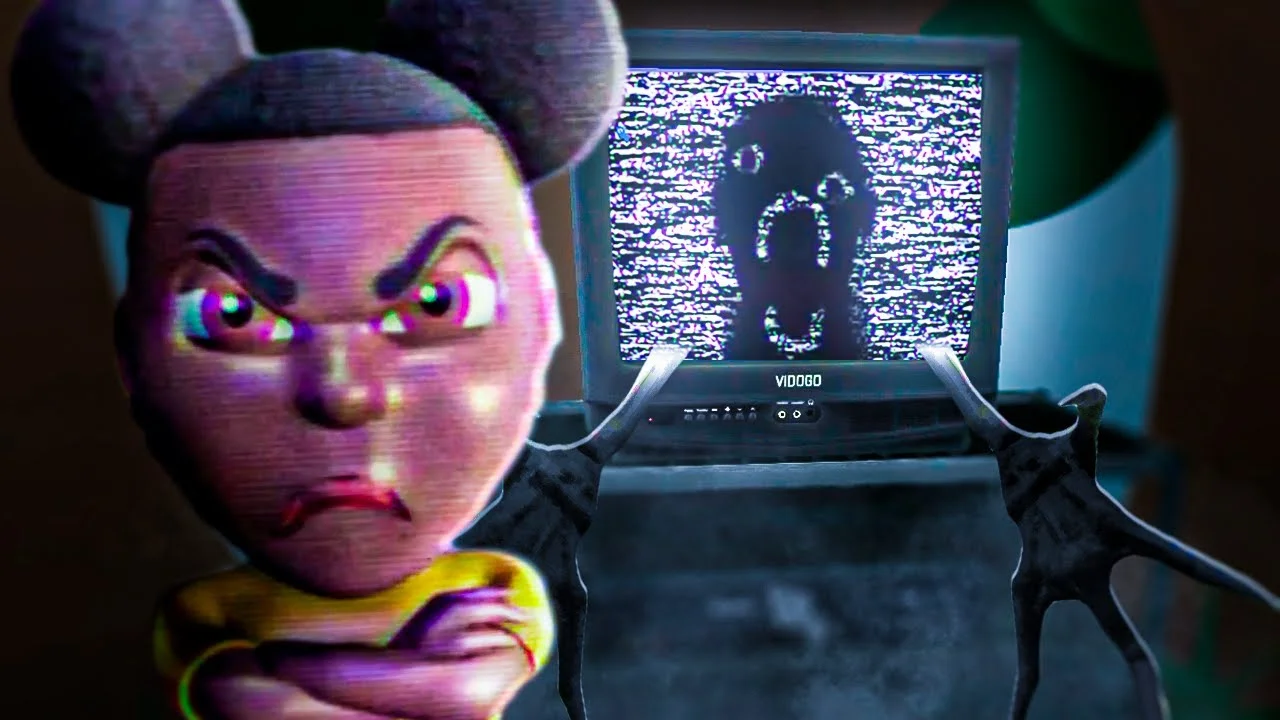
Endings Guide — What Each Choice Leads To
Amanda the Adventurer has five distinct endings shaped by how players interact with the tapes. Two are reachable through normal play; the others require finding all secret tapes or making specific defiant choices during key tape interactions.
The outcome of the tape "Everything Rots!" is pivotal — giving a wrong answer or ignoring a moral choice during "What's a Family?" triggers an immediate bad ending where Amanda's entity breaks through the attic trapdoor. The final tape, "We Can Share", branches into two very different conclusions depending on whether you accept or refuse Amanda's request. The true ending, which resolves the core mystery most completely, requires collecting every hidden tape in sequence.
From Cult Jam Entry to Trilogy — The Game's Legacy
What began as a 2022 game jam submission grew into a full Steam release, a Nintendo Switch port, PlayStation and Xbox versions, and ultimately a trilogy. Amanda the Adventurer 2 (October 2024) expanded the story to a public library, introducing new tapes, Joanne Cook as an ally-turned-antagonist, and a more complex layering of the Hameln lore. Amanda the Adventurer 3 (November 2025) serves as the concluding chapter, set inside Hameln's abandoned facility and bringing the fate of Rebecca, the missing children, and the Colton Anomaly to a definitive close.
The series remains one of the most important examples of analog horror adapted into an interactive format — a subgenre that treats lo-fi visual aesthetics, corporate horror, and found-footage conventions as narrative tools rather than just set dressing. If you've never experienced the original game, the attic is still waiting.
Hot Games

New Games

