12 MiniBattles
Games You May Like
12 MiniBattles Turns Simple Controls into Real Mind Games
12 MiniBattles looks like a light party game at first glance, but the design is smarter than it seems. Every round drops two players into a different micro-competition with almost no transition time, so the match constantly tests your ability to read situations quickly. You are not only reacting with your fingers, you are also decoding new rules every few seconds.
One battle may reward timing, another rewards spacing, and the next rewards patience. Because the game shuffles round types, you cannot rely on one trick or one dominant mode. The player who wins consistently is usually the one who adapts fastest and stays calm when the mini game flips from offense to defense in an instant.
What Makes the Match Flow So Fast
- 🎯 Each player usually has one main button, reducing input complexity.
- Round types rotate randomly, so momentum can swing at any time.
- Mini rounds are short, creating constant comeback opportunities.
- 🚀 Point-race format keeps pressure high even when trailing.
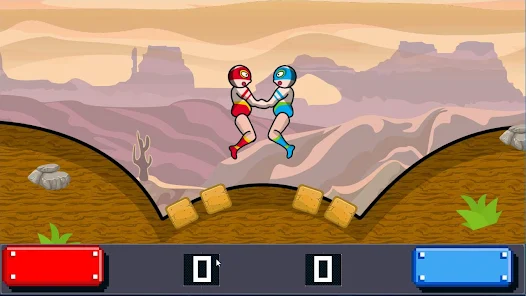
How to Read a New Round in 1-2 Seconds
The opening second decides most rounds. Instead of spamming your key, identify the win condition first: do you need to survive, score, knock out, or race to a trigger? That tiny pause prevents panic inputs and gives you cleaner first movement. Strong players develop a quick checklist: objective, danger zone, then timing window.
Pattern Recognition Matters More Than Reflexes
Even with random order, each mini game follows a repeatable rhythm. Weapon arcs, projectile timing, and movement speed all become readable after a few appearances. If you lose a round, treat it as data for the next occurrence. Over several matches, that memory advantage becomes huge.
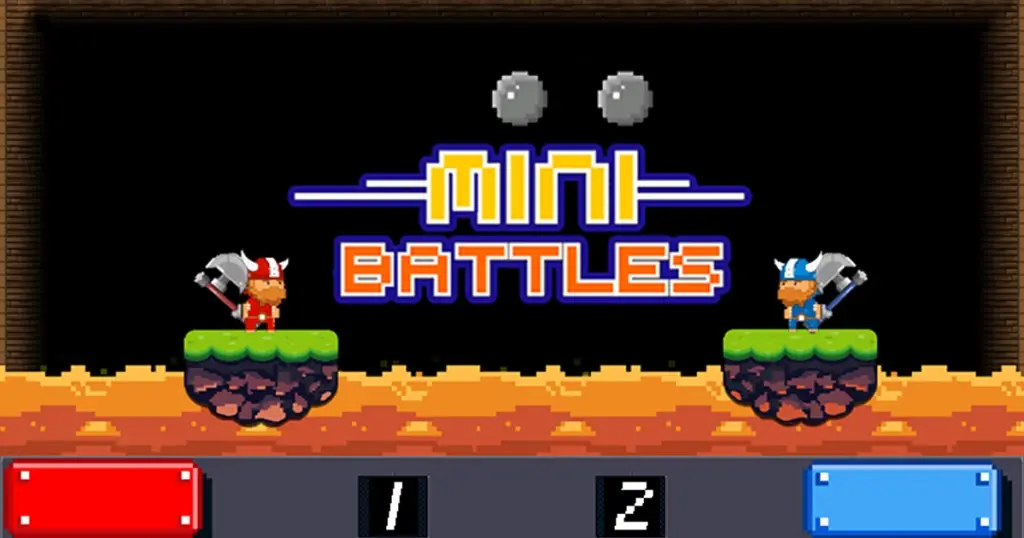
Practical Strategy for Winning More Sets
- 🔥 Use controlled taps first, then speed up only after you understand the round tempo.
- When ahead on points, play low-risk and force your opponent to overextend.
- When behind, take initiative early in each round to steal momentum back.
- 💡 Track which mini game types your opponent struggles with and pressure those moments.
- Between rounds, reset mentally so one bad loss does not affect the next decision.
Common Mistakes to Avoid
- 🧩 Button mashing before understanding the objective.
- Repeating the same timing after an opponent has already adapted.
- Playing too aggressively when you only need one safe point to close the set.
- 🧠 Staying unpredictable is often more important than raw speed.
Advanced Strategy Layers
When basics feel stable in 12 MiniBattles, improvement comes more from decision quality than raw speed. Instead of trying to force perfect runs, focus on reading repeated situations better each attempt and making one cleaner choice at a time.
A practical way to level up is to review the moment just before each mistake, identify what signal you missed, and apply a small correction in the next run. This keeps progress steady and makes your playstyle look more controlled over long sessions.
Progression Checklist
- 💡 Define a repeatable baseline route or approach.
- Improve execution consistency before pushing risky optimization.
- Track conversion rate in high-pressure moments.
- 🎯 Refine one mechanic at a time until it is automatic.
- Return to advanced routes only after baseline stability is strong.
Common Mistakes and Quick Fixes
Most failed attempts come from over-committing after a good moment, rushing transitions, or trying to recover too aggressively. A quick fix is to reset your pace for a few seconds, re-establish clean positioning, and only take higher-risk plays when the setup is clearly in your favor.
Hot Games

New Games

